
Quick Summary
- The learning environment shapes a special needs student's self-esteem as much as the curriculum does.
- Research links learning disabilities and ADHD to higher rates of school anxiety and lower self-esteem, which makes the right setting essential.
- Confidence-building environments share three features: small class sizes, individualized planning, and a school culture that fosters resilience.
- Ignite Achievement Academy combines one-to-one and small-group instruction, Individualized Academic Plans, and a warm yet structured atmosphere to support emotional growth.
- Parents can explore whether this kind of environment is the right fit for their child by scheduling a tour.
The Learning Environment
Most conversations about special education focus on methods, materials, and outcomes. Those things are essential. Yet for many children, the emotional climate of a classroom determines whether any of that instruction can land. A student who feels embarrassed, overwhelmed, or singled out spends mental energy managing stress instead of learning.
This is the core challenge of special needs confidence. A child who has struggled in a traditional setting often arrives carrying years of frustration. They may have learned to expect failure, to hide their difficulties, or to give up before they begin. No worksheet can undo that on its own. The surrounding environment, the tone of the teachers, and the culture of the peer group are what slowly rebuild a student's belief in their own ability.
The Hidden Cost of the Wrong Environment
Understanding why the environment matters starts with understanding what students with learning differences often carry. The emotional toll is well documented. A meta-analysis of 58 studies found that roughly 70 percent of students with learning disabilities showed anxious symptoms, far above the rate seen in their peers (Nelson and Harwood, reported in International OMC).
Self-esteem follows a similar pattern. Children with learning disabilities and math disabilities have been found to show higher levels of school anxiety and lower self-esteem at school than children with typical learning (Bonifacci et al., ResearchGate, 2014). The effect can persist into adulthood. One study of university students found that the dyslexic group had significantly lower self-esteem than their matched peers (Riddick et al., Dyslexia, 1999).
What a Confidence-Building Environment Looks Like
A supportive setting is built from specific, repeatable practices. Three elements consistently make the difference for students who need a different kind of classroom.
Small Class Sizes and Personalized Attention
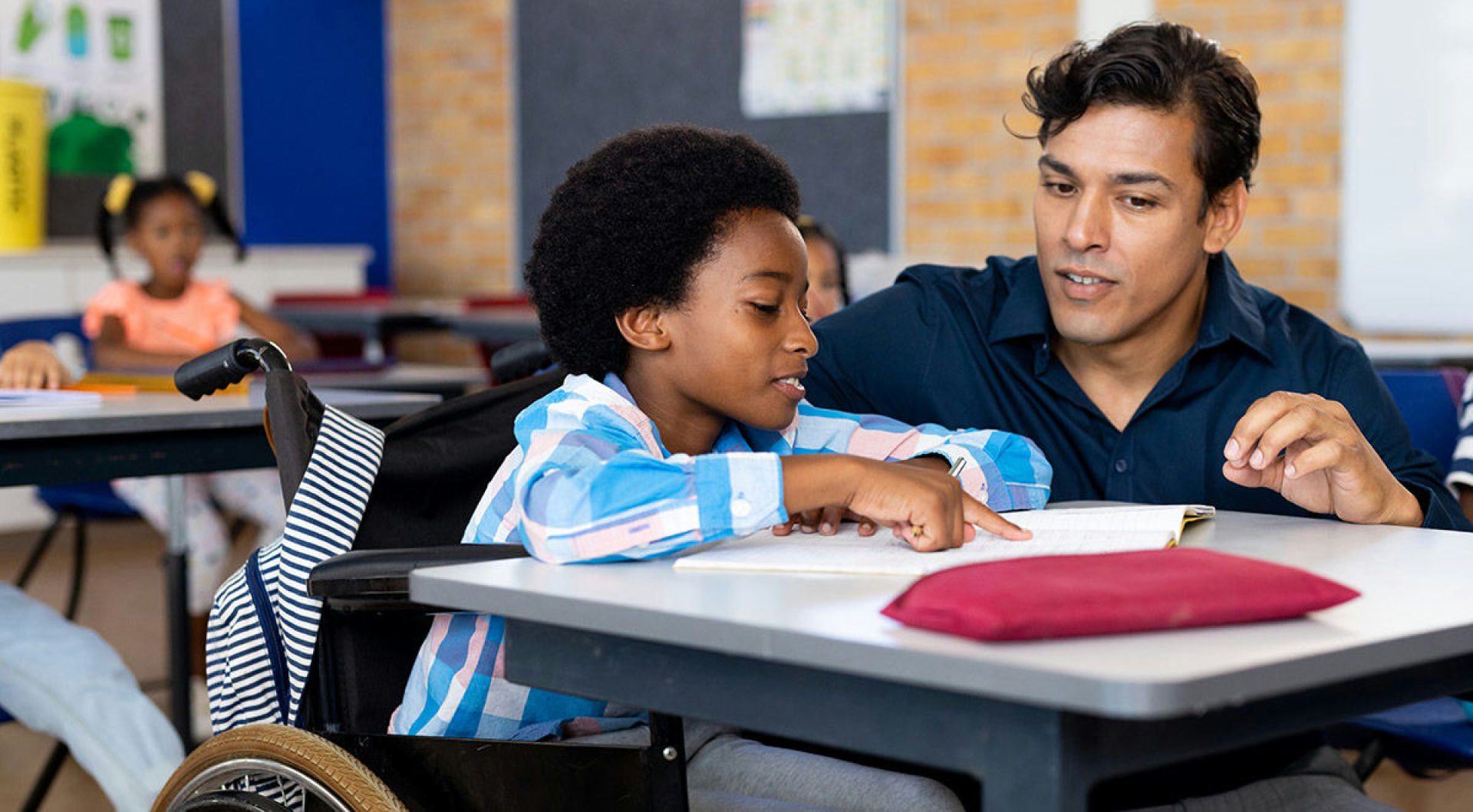
When a teacher is responsible for thirty students, even the most caring educator cannot meet each child where they are. Small class sizes change the entire dynamic. At Ignite Achievement Academy, our maximum class size is eight students, and many students begin in even more intensive settings.
This structure matters for self-esteem in learning disabilities for several reasons:
- Teachers can notice when a student is struggling before frustration takes over.
- Students get frequent, individual encouragement rather than blending into the background.
- The social pressure that often fuels anxiety is dramatically reduced.
- Children feel known, which is the foundation of feeling safe.
For students whose attention or processing needs require it, we use one-to-one instruction as an anchor. Many students respond so well that they are ready to join our small classrooms for part or all of the day within several months. That early intensity builds momentum, and momentum builds confidence.
Individualized Academic Plans
Standardized formulas rarely serve students with learning differences. Our approach centers on Individualized Academic Plans, which are carefully crafted to address each student's unique learning requirements. Rather than asking the child to fit the program, we shape the program around the child.
This individualized structure supports emotional growth for ADHD and other profiles in a practical way. When work is matched to a student's actual skill level, they experience success often enough to stay engaged. When the plan stops working, we identify the breakdown and adjust. That responsiveness signals something important to the student, which is that the adults around them are paying close attention and are on their side. You can learn more about how this works through our academic programs.
A School Culture That Fosters Resilience
Decades of research point to certain perceptions that help students persevere despite serious obstacles. Resilient students tend to believe their problems do not define their whole lives, that difficulties will not last forever, and that they have at least one person who believes in their self-worth. We deliberately build a school environment that nurtures these beliefs.
The strategies are woven into the school day. They include ready access to a staff member who can help a student work through an overwhelming moment, close supervision, frequent encouragement, and learning strategies designed so that learning itself feels good. Most importantly, we maintain an atmosphere where students not only accept but appreciate individual differences. In that kind of community, a positive self-image for autism, ADHD, and learning disabilities has room to develop.
How Ignite Achievement Academy Builds Confidence in Charlotte
A confidence-building philosophy only matters if it shows up in the daily experience of students. Our Charlotte campuses translate these principles into concrete programs and routines.
We serve students in grades K through 12 who face barriers such as learning disabilities, language disorders, ADHD, autism spectrum disorder, anxiety, and depression. Across both campuses, that support takes several forms:
- One-to-one and small-group instruction that meets students at their precise skill level.
- A hands-on curriculum enriched with art, music, and physical education, which give students outlets for self-expression and connection.
- The FLAME program, a life-skills high school and transition program for students who are not traditionally college bound, which builds independence, self-advocacy, and a sense of personal capability. Explore the details on our FLAME program page.
- The BEACON program, which serves students with speech and behavioral needs through extremely small classes that average around five students, often with a speech-language pathologist co-teaching during direct instruction.
Sensory experiences also play a role. Our hands-on activities and on-campus sensory spaces support emotional regulation and reduce anxiety, which helps students access learning more readily. Each of these elements reinforces the same message to the child, which is that they belong here and they can succeed here.
Read our guide for parents on executive function skills.
Signs the Environment Is Working
Parents often ask how they will know the environment is making a difference. The signs tend to be unmistakable, and our families describe them in their own words.
One parent shared that after a discouraging year in a previous school, her son blossomed at Ignite. With the social pressures off and a learning plan tailored to him, in her words, "he has become a stronger and more confident student in all subjects, and once again he says he loves math!"
You can read more family experiences on our testimonials page. The common thread is not just better grades. It is a child who feels capable, calm, and hopeful about the future.
Frequently Asked Questions
Does Ignite Achievement Academy offer IEPs?
We do not use IEPs, which is a public school term. Instead, we develop Individualized Academic Plans for each student. These plans are crafted around a child's specific strengths, challenges, and goals, and they are adjusted as the student grows.
How small are the classes?
Our maximum class size is eight students. For students who need more intensive support, we offer one-to-one and small-group instruction, and our BEACON program averages around five students per class.
Can the right environment really improve my child's confidence?
Yes. Research shows that students with learning differences often carry lower self-esteem and higher anxiety, and a supportive environment directly addresses those challenges. By pairing academic success with a culture of acceptance, students gradually build a more positive self-image.
Which students does the academy serve?
We work with students in grades K through 12 who face barriers including learning disabilities, language disorders, ADHD, autism spectrum disorder, anxiety, and depression. To explore fit, visit our page on whether Ignite is right for your child.
Where are the campuses located?
Ignite Achievement Academy operates a North Charlotte campus on W.T. Harris Boulevard and a South Charlotte campus on Carmel Road. Both serve families across the greater Charlotte area.
A Place Where Confidence Can Grow
The educational environment is not a minor detail in special education. For many students, it is the difference between shrinking and thriving. When a child feels safe, known, and genuinely supported, confidence building in special education becomes a daily reality rather than a distant hope.
Ignite Achievement Academy is an accredited private school, recognized by Cognia, built around exactly this belief. If you are searching for a setting where your child can rebuild self-esteem and rediscover a love of learning, we would love to show you what that looks like. Learn more about our academy, review our tuition and fees schedule, and schedule a tour or request information today.
If you would like to learn more about how a specialized learning environment can support your child year-round, we encourage you to reach out to our admissions team to schedule a tour and discover whether Ignite Achievement Academy is the right fit for your family.